Actualisé 5 Heures il y a
Emballages en papier recyclable: Guide de design pour les marques de café

ypak.coffee
YPAK PACKAGING GROUP a été créé à 2011 et formé avec 3 entreprises basées à Hong Kong, Dongguan et Foshan. Nous sommes devenus l’un des plus grands fabricants de sachets de café en Chine. Nous utilisons les meilleures vannes WIPF de Suisse pour garder votre café frais.
Respecter la politique d’interdiction du plastique imposée à de nombreux pays différents, Nous avons recherché et développé les sacs d’emballage durables, comme les sachets RECYCLABLES et COMPOSTABLES.
Pas de quantité minimale, aucune plaque couleur n’est requise avec notre service d’impression numérique HP 25K INDIGO.
Vous êtes les bienvenus pour visiter YPAK.
emballages en papier recyclable
Coffee brands are attracted to recyclable paper packaging because it fits familiar consumer disposal habits, provides a large printable surface, and supports many packaging structures. It can be used for drip coffee cartons, Manches, Boîtes cadeaux, Inserts, takeaway carriers, shipping cartons, and selected beverage-service packaging.
Toutefois, paper-based does not automatically mean that a finished package will be easy to recycle. Fenêtres en plastique, Revêtements barrières, metallic decoration, Adhésifs, food residue, and permanently attached components can change how the package performs in a recycling system.
Effective packaging should be considered from beginning to end: from material selection and coffee protection to consumer use and final disposal.
Comment cela fait-il ? You Determine Whether Paper Packaging Is Recyclable?
Recyclable paper packaging allows recoverable paper fibers to be collected, Traité, and reused through an appropriate paper recycling stream.
A simple folding carton made primarily from paperboard may be relatively easy to recover. A paper package containing plastic film, Fleuret aluminium, Mousse, aimants, or heavy lamination requires more careful evaluation.
Local infrastructure is also important. A technically recoverable structure may not be suitable in a market without the necessary collection or processing system. Recyclability claims should therefore reflect both the complete packaging structure and the market in which it will be used.
Where Can Café Brands Use Paper Packaging?
Paper-based structures are practical when packaging requires stiffness, product grouping, display space, or secondary protection. Common applications include:
- Drip coffee folding cartons
- Paper sleeves around sealed coffee bags
- Coffee capsule and pod boxes
- Paperboard inserts for gift sets
- Carriers for cups or bottled beverages
- Corrugated shipping cartons
- Tasses en papier, Leeds, and sleeves
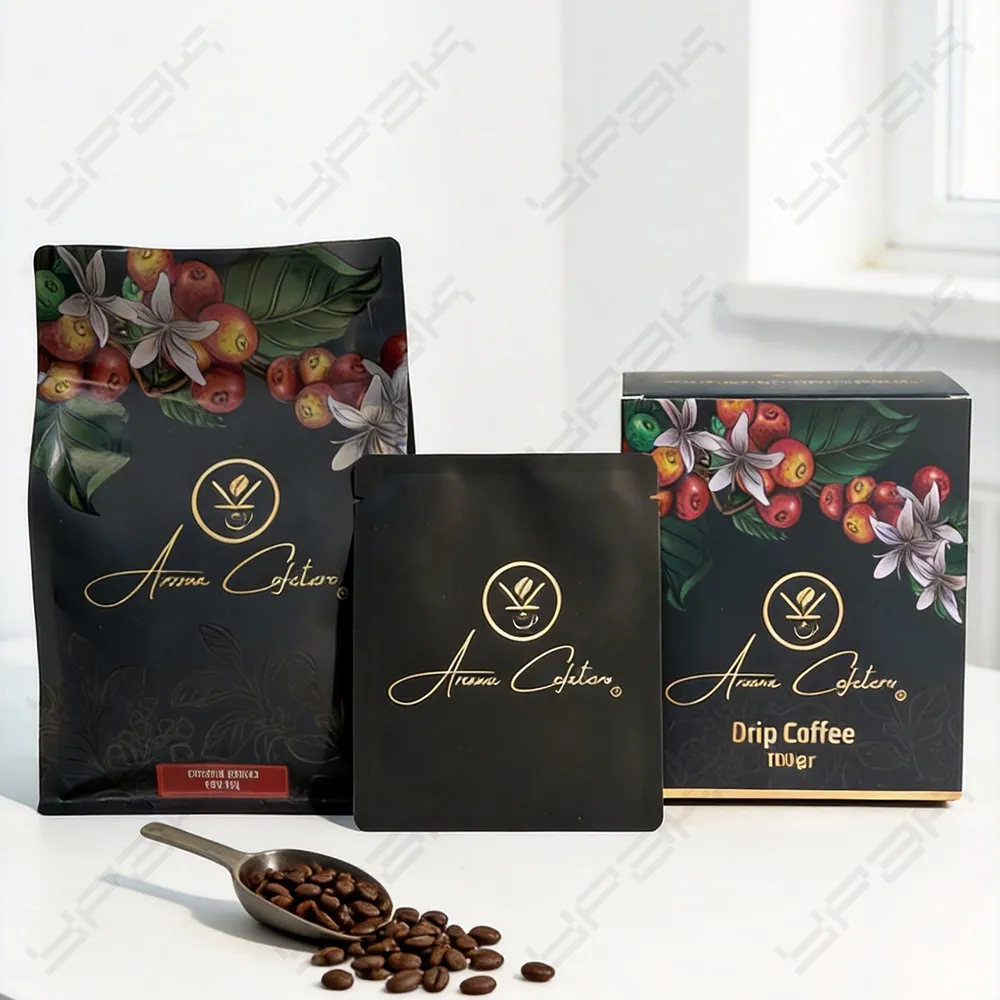
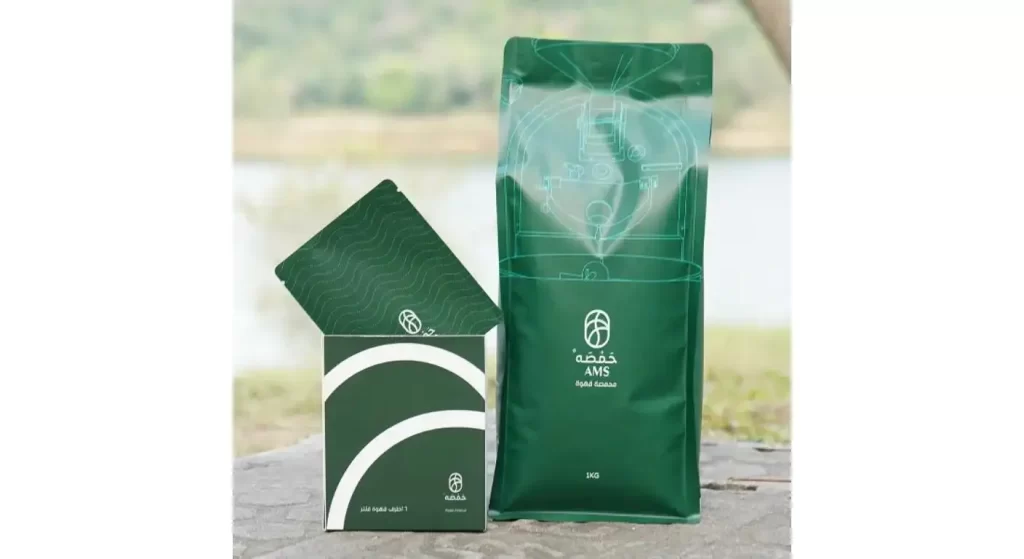
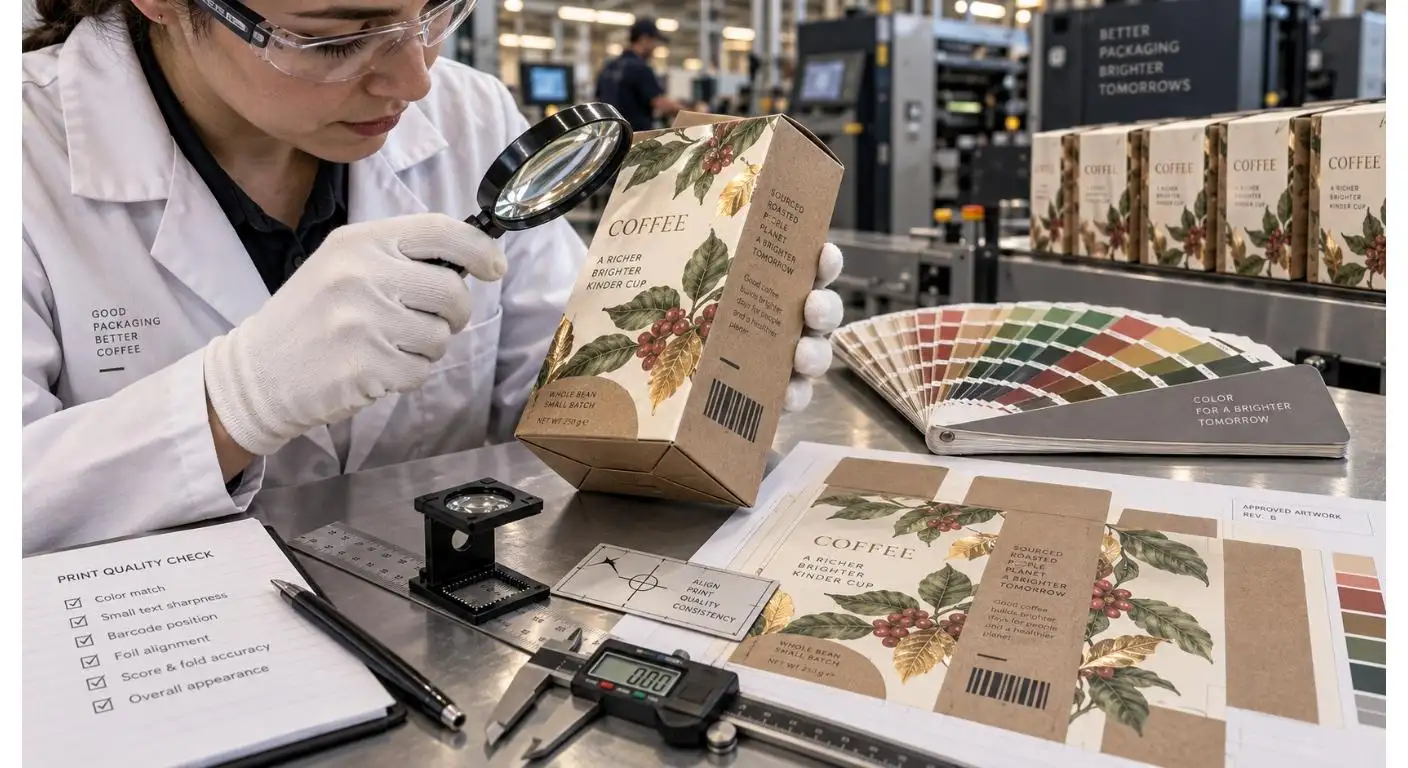
YPAK’s Boîte en papier filtre personnalisée demonstrates how paperboard can organize individual drip coffee sachets while providing an immediately recognizable, retail-ready branding surface.
Pourquoi Papier Alone Usually Insufficient for Coffee?
Après la torréfaction, coffee must be protected from oxygen, Humidité, et perte d’arôme. Conventional uncoated paper is not normally suitable for storing roasted coffee directly over an extended period.
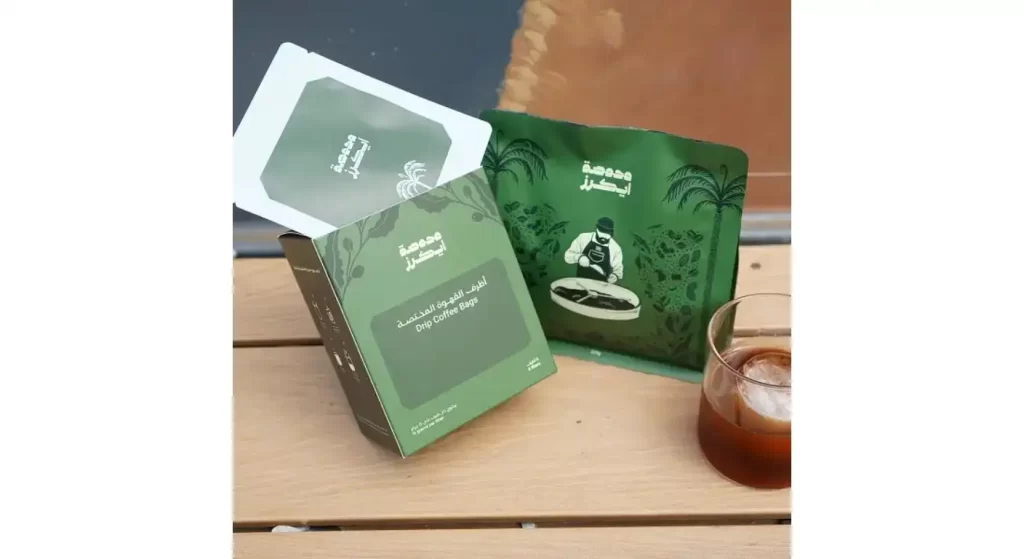
Coffee beans or ground coffee are therefore commonly packed in a functional barrier pouch, with a recyclable paper box used as secondary packaging. La boîte fournit une structure, light handling protection, Informations sur le produit, et présentation en vente au détail.
The inner bag and outer box should be evaluated separately. The paper box may enter a paper recycling stream, while the barrier pouch may require separate collection. YPAK’s Kit d’emballage pour café recyclable shows how different components can be coordinated within one branded packaging system.
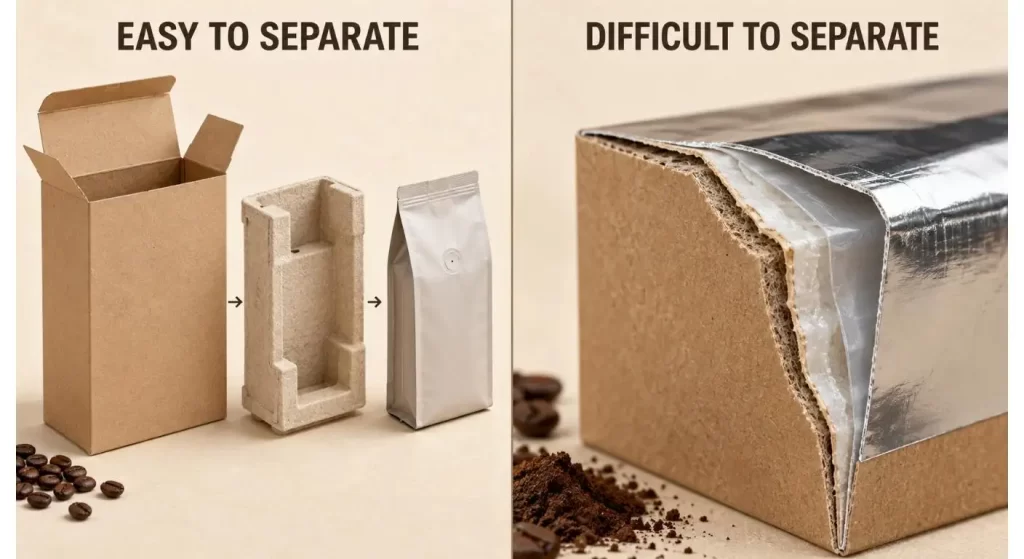
Ce qui Composants Can Make Recycling More Difficult?
Paper recycling requires fibers to be separated and recovered. Some components are difficult to remove or may break down into unwanted material, reducing processing efficiency.
Potential problem areas include:
- Full plastic lamination
- Large transparent plastic windows
- Foil-covered surfaces
- Foam or plastic cushioning inserts
- Metal closures and magnets
- Thick waterproof coatings
- Heavy adhesive coverage
- Liquid or solid food contamination
A coating or decorative feature does not automatically make a package non-recyclable. Its effect depends on the material type, amount, separation behavior, and target recycling system. Buyers should request technical evidence rather than judge a package by its paper-like appearance.
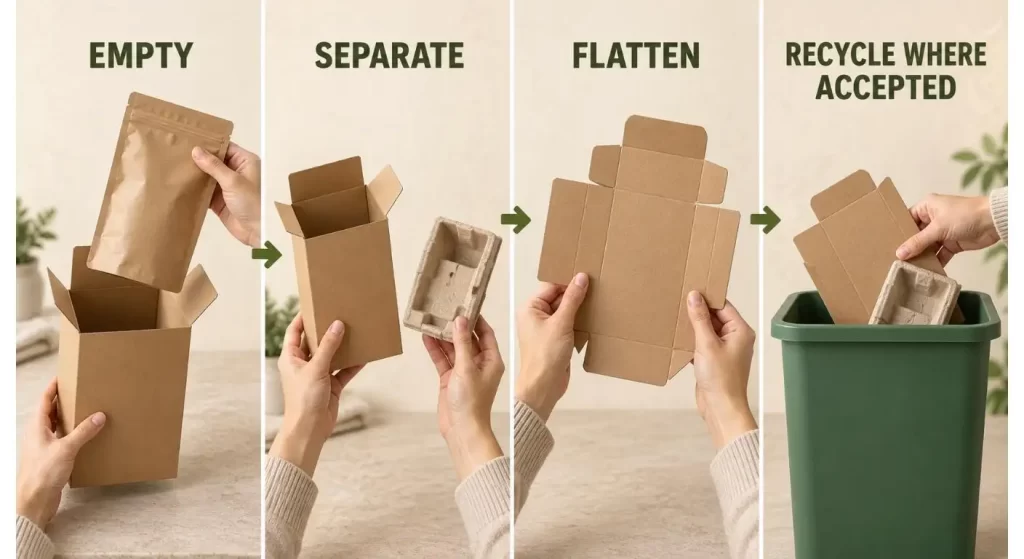
Comment cela fait-il ? Emballage Be Designed for Easier Separation?
Begin by reducing unnecessary material. A paperboard box with a paper insert is easier for consumers to understand and separate than a package combining paper, Mousse, aimants, ruban, and a bonded plastic tray.
| Packaging component | Simpler design option | Question to confirm |
| Fenêtre transparente | Smaller detachable window | Is the window necessary? |
| Product insert | Folded paperboard insert | Can foam or plastic be removed? |
| Surface protection | Limited compatible varnish | Is full lamination required? |
| Box closure | Paper locking tab | Can magnets be avoided? |
| Decorative finish | Selective foil or embossing | Can total coverage be reduced? |
| Inner coffee pouch | Clearly removable pouch | Are disposal routes explained separately? |
When another material is necessary, make it easy to identify and remove. A detachable window or removable inner pouch is generally easier to separate than a component permanently bonded into the paper structure.
Print short, specific disposal instructions. Par exemple, ask consumers to remove the inner pouch, flatten the paper box, and follow local collection guidance. Avoid vague claims such as 100% green that do not tell consumers what action to take.
Ce qui Revêtements and Printing Methods Should Be Chosen?
Printing and surface treatments should improve appearance without adding unnecessary material complexity. Water-based inks and limited varnish may be suitable for some paper packages, but compatibility should be confirmed with the supplier and the target recycling system.
Matte or gloss plastic lamination improves scuff and moisture resistance but adds another material layer. When heavy surface protection is unnecessary, consider a varnish or other finish designed for compatibility with paper recycling.
Use foil stamping, spot effects, and embossed details selectively. Decoration should be concentrated where it adds visible brand value rather than applied across the entire box.
What Is the Fonction of Paper Inserts?
Inserts hold products in place, separate flavors, and improve the unboxing experience. They are especially useful in coffee gift boxes containing several bags, Tasses, brewing tools, or drip coffee cartons.
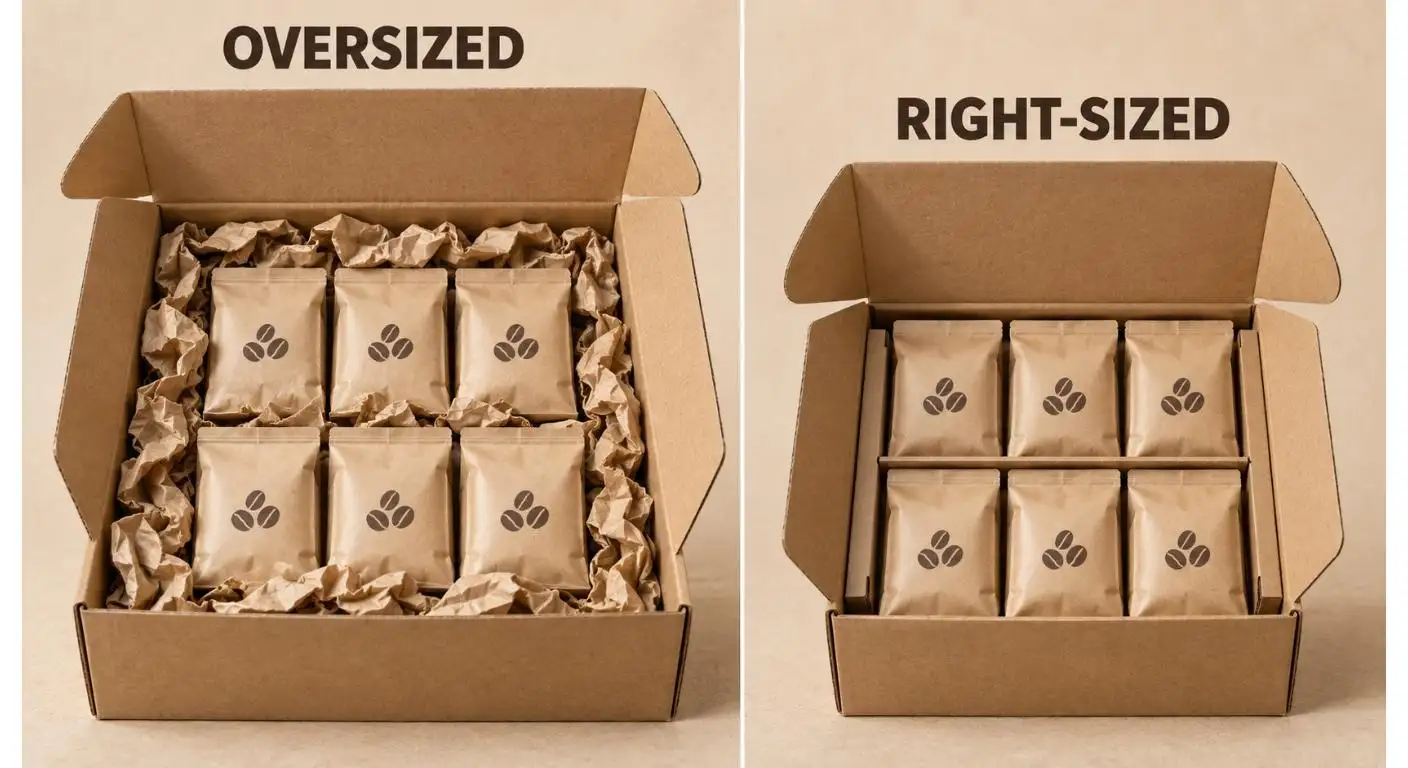
Molded fiber or folded paperboard inserts can reduce the need for foam and thermoformed plastic trays. The insert should use only the material necessary to secure the product.
Test inserts with actual filled products before production. An insert that is too loose may collapse during shipping, while one that is too tight can damage pouches or make products difficult to remove.
Are Papier Cups Recyclable?
Paper cups require a lining or coating that prevents hot or cold liquids from leaking. Their recyclability depends on the lining type and the capabilities of the local collection and processing infrastructure.
Food and beverage residue can also affect recovery. Coffee companies should confirm whether coated cups are accepted locally before describing them as widely recyclable.
Paper grade, heat performance, impression, and disposal goals should all be considered when selecting disposable coffee paper cups. YPAK's paper cup guidance can help buyers compare these requirements.
Comment Devrait Recyclability Be Tested and Verified?
Request a complete material specification from the packaging supplier rather than only the percentage of paper. The specification should identify the paperboard, Revêtements, Adhésifs, Fenêtres, Inserts, decorations, et fermetures.
Prochain, determine whether the full structure is compatible with the intended recycling stream. Requirements may differ by country or region, and a claim accepted in one market may require different wording in another.
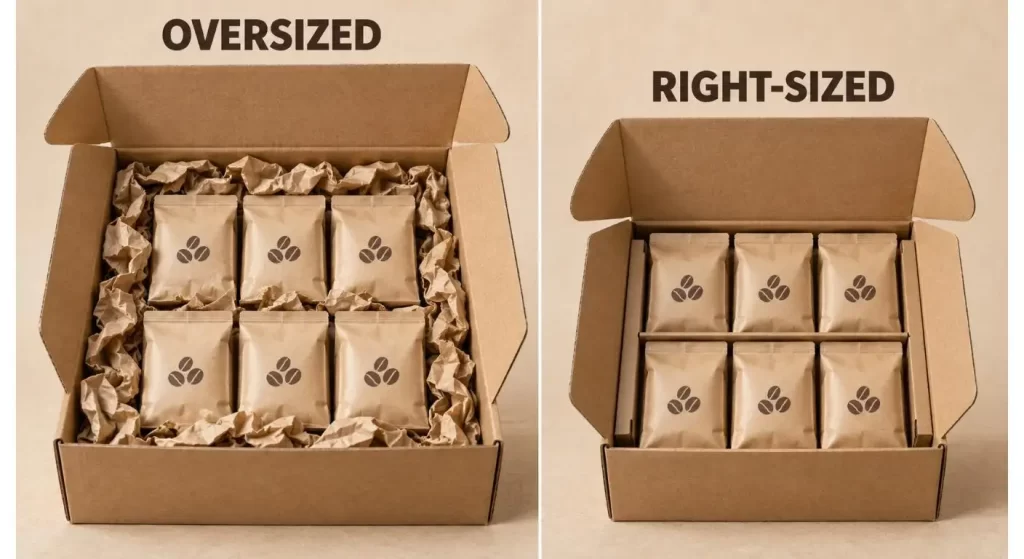
Brands should also evaluate physical performance. A package that is easy to recycle but fails during transport and damages the product is not an efficient environmental solution.
Quoi Information Should Appear on the Packaging?
Communicate material and disposal information clearly and support it with evidence. Instructions may need to identify components that should be separated and direct consumers to local collection guidance.
Do not use recyclable, Compostable, and biodegradable interchangeably. They describe different end-of-life pathways and require different conditions and evidence.
If the box is recyclable but the inner pouch is not accepted in the same stream, state this clearly. Specific disposal instructions are more useful than broad environmental statements.
Conclusion
Effective recyclable paper packaging begins with material simplicity, reliable product protection, separable components, and disposal instructions suited to the target market. Coffee companies should evaluate the entire packaging system rather than only its visible paper surface.
Avant de demander un devis, provide dimensions, Poids rempli, barrier requirements, Marché cible, decoration preferences, and the intended disposal claim. Brands can contactez YPAK for assistance with packaging structure, matériaux, impression, et échantillonnage.
FAQ
Q1. Are all paper coffee boxes recyclable?
Non. Revêtements, Fenêtres, Adhésifs, Inserts, and decorations can affect recyclability. The complete packaging structure and local recycling requirements must be considered.
Q2. Can coffee be packed directly in recyclable paper?
Most conventional paper does not provide sufficient oxygen and moisture protection for roasted coffee. A suitable barrier layer or separate inner pouch is generally required.
Q3. What is the difference between recyclable and compostable packaging?
Recyclable packaging is processed into recovered material. Compostable packaging is designed to break down under specified composting conditions; the two terms are not interchangeable.
Q4. Should plastic windows be removed from paper boxes?
Removal may improve material separation, depending on the structure and local collection rules. Windows should be easy to detach, with clear disposal instructions for consumers.
Q5. What information should buyers request from suppliers?
Request the complete material construction, coating and adhesive details, printing specification, supporting test information, and recommended disposal method for the target market.
Q6. Quelle est la quantité minimale de commande?
La quantité minimale de commande est 2,000 morceaux. Les exigences finales peuvent varier selon la taille de l’emballage, matériel, Structure, Méthode d’impression, et spécifications de personnalisation.
Écrit par
ypak.coffee
ypak
YPAK PACKAGING GROUP a été créé à 2011 et formé avec 3 entreprises basées à Hong Kong, Dongguan et Foshan. Nous sommes devenus l’un des plus grands fabricants de sachets de café en Chine. Nous utilisons les meilleures vannes WIPF de Suisse pour garder votre café frais.
Respecter la politique d’interdiction du plastique imposée à de nombreux pays différents, Nous avons recherché et développé les sacs d’emballage durables, comme les sachets RECYCLABLES et COMPOSTABLES.
Pas de quantité minimale, aucune plaque couleur n’est requise avec notre service d’impression numérique HP 25K INDIGO.
Vous êtes les bienvenus pour visiter YPAK.
Articles connexes
Emballage de sacs de café personnalisés en gros: Un guide d’achat
Boîtes imprimées personnalisées: De la conception de l’emballage du café à la production
Emballages en papier recyclable: Guide de design pour les marques de café